
Part 1 of a Five-Part Series on DBT Skills
Dialectical Behavior Therapy, usually called DBT, is a form of therapy designed to help people manage difficult emotions, navigate relationships, cope with painful situations, and build lives that feel more meaningful and manageable.
Psychologist Marsha Linehan originally developed DBT to treat people experiencing chronic suicidal thoughts and borderline personality disorder. Over time, however, DBT and DBT-informed approaches have been used much more broadly. Its skills can be helpful for people struggling with anxiety, depression, trauma-related difficulties, impulsive behavior, relationship problems, anger, and overwhelming emotions. Many of its principles can also be useful to people who simply want better tools for dealing with the ordinary stresses of life.
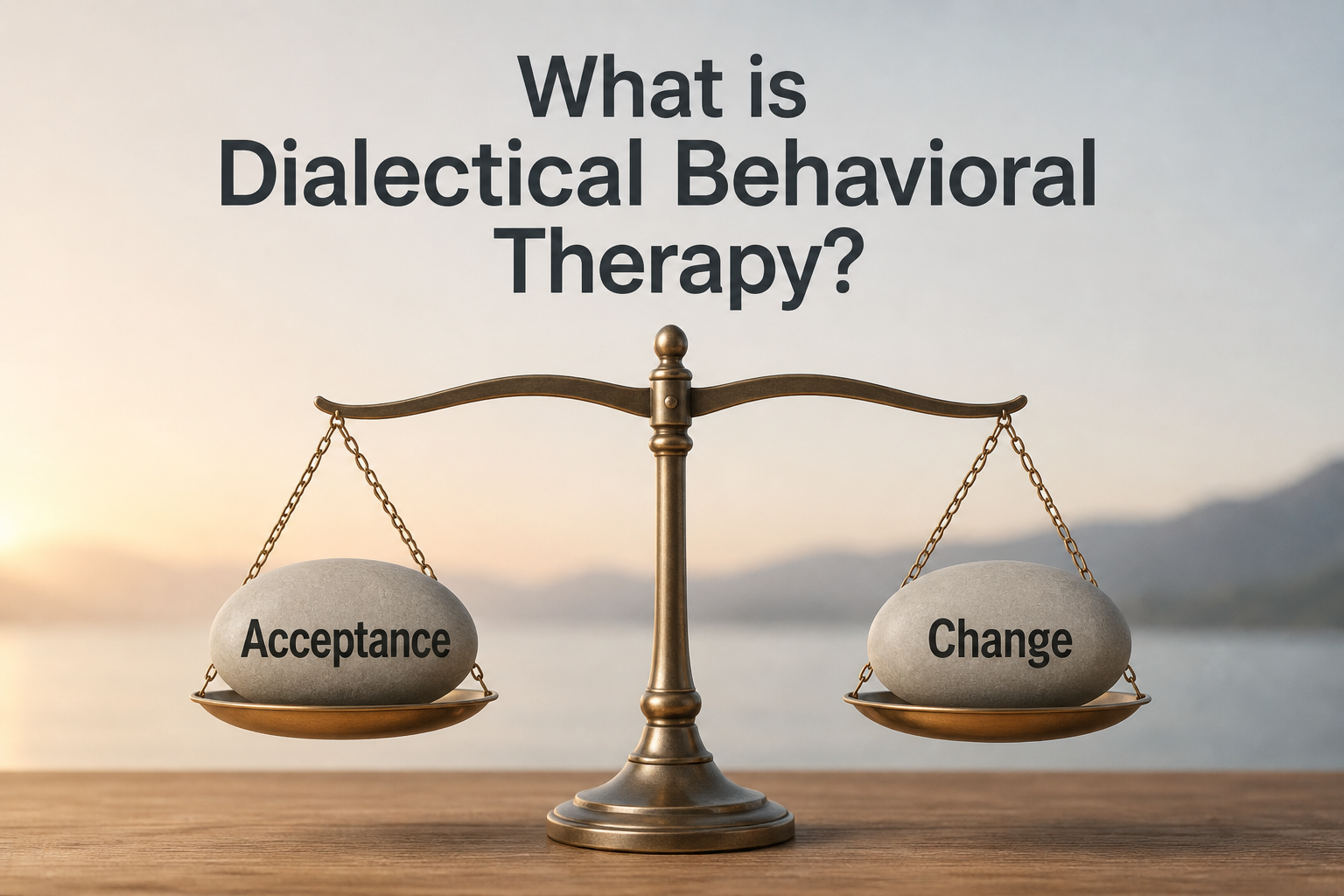
At its heart, DBT asks an interesting question: How can we accept ourselves and our lives as they are while also working to change them?
What Does “Dialectical” Mean?
The word dialectical refers to the idea that two things that seem contradictory can both contain truth.
For example:
I am doing the best I can, and I need to do better.
Those statements may initially seem incompatible. If I am already doing my best, why should I need to do better? DBT asks us to consider that both can be true. Given your history, circumstances, knowledge, emotional state, and skills, you may genuinely be doing the best you can right now. At the same time, what you are doing may not be working. You may need to learn new skills, make different choices, or change your circumstances.
This balance between acceptance and change runs throughout DBT. Acceptance without change can leave us stuck. Change without acceptance can turn into constant self-criticism. DBT tries to hold both.
The Assumptions of DBT
DBT is built around several assumptions about people and behavior. Among the most important are:
- People are doing the best they can.
- People want to improve.
- People need to do better, try harder, and become more motivated to change.
- People may not have caused all of their problems, but they still have to solve them.
- New behaviors have to be learned and practiced in the situations where they are needed.
- People cannot fail at DBT. When treatment isn’t working, the task is to understand what isn’t working and make adjustments.
These assumptions reflect the dialectical nature of the treatment. DBT does not require us to decide whether someone is responsible or blameless, strong or weak, trying or not trying. Human behavior is usually more complicated than that.
You may not have chosen the circumstances that caused your pain. You may nevertheless be the person who has to figure out what to do about it.
What Is the Goal of DBT?
The broad goal of DBT is sometimes described as building a life worth living.
That will mean different things to different people. For one person, it might mean maintaining relationships without constantly fearing abandonment. For another, it might mean getting through intense emotions without using substances or self-destructive behaviors. Someone else might want to communicate more effectively, manage anger, tolerate uncertainty, or stop allowing anxiety to dictate everyday decisions.
DBT therefore isn’t simply about making unpleasant feelings disappear. Sometimes feelings provide useful information. Sometimes distress is an understandable response to genuinely difficult circumstances. And sometimes a painful situation cannot immediately be changed.
Instead, DBT teaches us to respond more effectively to whatever situation we are actually facing.
Four Ways to Respond to a Problem
One particularly useful DBT idea is that there are essentially four ways we can respond to a problem.
We can solve the problem—or leave the situation. If something can be changed, we can identify the problem and take practical steps to address it. Sometimes the solution is changing or leaving the situation itself.
We can feel better about the problem. A situation may remain the same while our emotional response to it changes. We can examine our interpretations, regulate emotions, practice acceptance, or find a different way of relating to what happened.
We can tolerate the problem. Some problems cannot be fixed right now. DBT teaches distress-tolerance skills for getting through painful situations without making them worse.
Or we can do nothing and stay miserable.
That last option may sound harsh, but it reflects an important point: doing nothing is still a choice. Sometimes we cannot control what happened to us, what another person does, or what life has placed in our path. We can still work on choosing our response.
The Four DBT Skill Groups
DBT organizes many of its practical tools into four major skill areas.
Mindfulness teaches us to pay attention to what is happening in the present moment without immediately judging it or reacting to it. It forms the foundation for many other DBT skills.
Emotion regulation helps us understand emotions, reduce emotional vulnerability, and respond to feelings in ways that fit the situation rather than simply acting on emotional impulses.
Distress tolerance focuses on surviving painful moments that we cannot immediately change. The goal isn’t to pretend that distress feels good. It is to get through it without turning a difficult situation into an even more difficult one.
Interpersonal effectiveness focuses on relationships: asking for what we need, saying no, setting boundaries, managing conflict, maintaining self-respect, and balancing our own needs with those of other people.
Together, these skills provide something like a toolbox. DBT isn’t about using every tool in every situation. It is about recognizing what kind of problem you’re facing and learning which tool is most likely to help.
In the next four parts of this series, we’ll look more closely at each of these skill areas, beginning with mindfulness—the foundation on which the rest of DBT is built.
If you live in Washington State, and would like to set up an appointment with Susan Reimers, LICSW at Transcendent Mental Health, please click here.

