
Therapy, Disability

C-PTSD in the Disability Community

When Trauma Becomes Part of Everyday Life

When most people hear the term PTSD, they may think about a single traumatic event: a serious accident, an assault, military combat, a natural disaster, or another experience that left someone feeling unsafe. But trauma doesn’t always happen once. Sometimes it happens repeatedly, over months or years, and sometimes there is no easy way to escape the circumstances causing it.

This is where complex post-traumatic stress disorder, or C-PTSD, comes into the picture. PTSD and C-PTSD have a lot in common, but C-PTSD can develop in the context of prolonged or repeated trauma. It can affect not only how someone responds to memories of trauma, but also how they see themselves, regulate their emotions, relate to other people, and experience the world around them. For disabled people, that distinction can be particularly meaningful.

Disability itself does not cause C-PTSD. Being disabled is not inherently traumatic. But disabled people can experience repeated discrimination, exclusion, medical trauma, abuse, inaccessible environments, social isolation, and messages that they are less capable or less valuable than nondisabled people. When those experiences pile up over time, they can have a profound effect.

PTSD and C-PTSD: What’s the Difference?

PTSD can develop after someone experiences or witnesses something deeply frightening, threatening, or traumatic. The symptoms generally fall into several broad categories. Someone with PTSD may repeatedly experience the traumatic event through unwanted memories, nightmares, flashbacks, or intense emotional reactions. They may avoid people, places, conversations, or activities that remind them of what happened. They may also experience changes in their mood and thinking, such as persistent fear, guilt, shame, anger, or difficulty feeling positive emotions.

Another major part of PTSD is feeling constantly on guard. A person might startle easily, have trouble sleeping, feel irritable, or constantly scan their surroundings for danger.

C-PTSD can include all of these PTSD symptoms, but it also involves deeper, longer-lasting effects on a person’s sense of self and relationships. Someone experiencing C-PTSD may struggle with regulating their emotions. Their reactions may sometimes feel overwhelming or difficult to control. They may carry a deep sense of shame or worthlessness. They may have difficulty trusting people, forming relationships, setting boundaries, or feeling genuinely safe and connected to others.

In other words, PTSD can involve the feeling that something terrible happened to me. C-PTSD can add the feeling that something terrible happened to me for so long that it changed how I see myself and the world.

When the World Keeps Telling You That You Don’t Belong

For many disabled people, trauma isn’t necessarily one dramatic event. Sometimes it’s the accumulation of thousands of smaller experiences. It’s being talked down to by strangers, having someone speak to the person accompanying you instead of speaking directly to you, having your disability questioned or dismissed, or repeatedly being told that you’re “too young” to be disabled, that you “don’t look disabled,” or that you’re making too much of your needs. It’s having to explain and defend yourself over and over again.

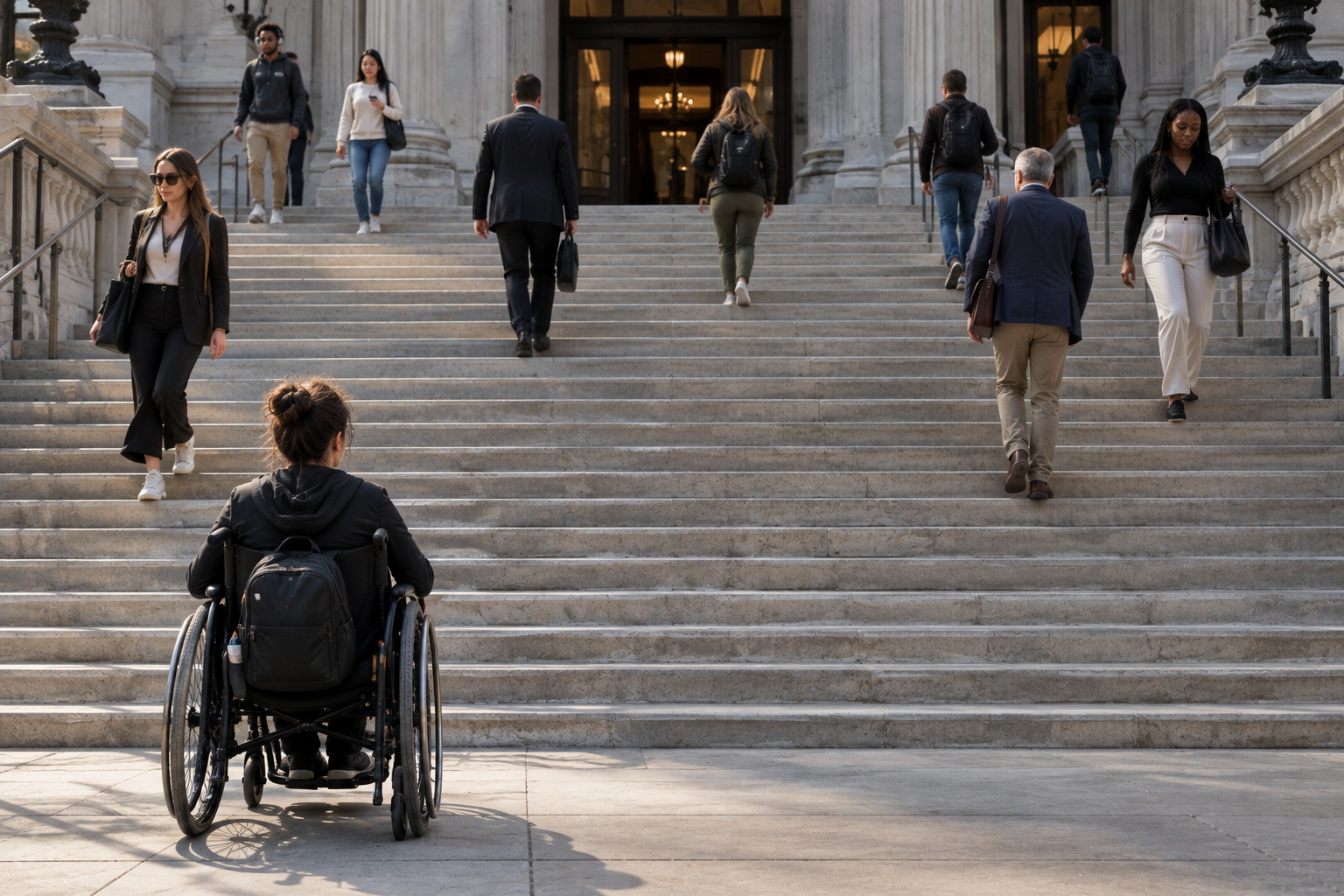
It’s also being excluded from places because they aren’t accessible. Accessibility problems aren’t just inconveniences when they happen repeatedly. Imagine being a wheelchair user and repeatedly arriving somewhere only to discover that there is no ramp or elevator. Imagine planning your day around whether a building has an accessible entrance, whether a bathroom can accommodate you, or whether transportation will actually be usable. Imagine being blind and navigating streets where sidewalks are poorly designed, crossings are dangerous, or the environment provides little reliable information about what is happening around you. Imagine having a sensory disability and repeatedly being expected to tolerate environments that overwhelm you because other people consider your needs inconvenient.

These experiences can create an ongoing sense that the world is not designed for you and that your safety, comfort, and participation are secondary concerns. When exclusion happens once, it can be frustrating. When it happens constantly, it can change how you experience the world.

The Damage of Being Othered

Disabled people are often treated as though they are fundamentally different from everyone else. Sometimes this is blatant, and sometimes it’s subtle. People may assume that a disabled person needs help without asking. They may assume someone can’t work, have relationships, raise children, live independently, make decisions, or pursue their goals. They may react with surprise when a disabled person does something completely ordinary.

There is another side to this, too: treating disabled people as inspirational simply for living their lives. A disabled person goes grocery shopping and someone acts as though they have accomplished something extraordinary. A disabled person gets a job and becomes a story about “overcoming adversity.” A disabled athlete, student, parent, or professional is presented primarily as an inspirational example rather than as a whole person.

This can sound positive, but it can still be dehumanizing. The underlying message can become: Your life exists to teach other people something. Disabled people don’t need to be inspirational simply for existing. They should be allowed to be ordinary human beings. They should be allowed to succeed, fail, struggle, rest, complain, have bad days, and pursue their goals without their disability becoming a lesson for everyone else.

Low Expectations Can Become Internalized

One of the most damaging things about constantly being underestimated is that eventually, you may start underestimating yourself. If you’re repeatedly told that something is too difficult for you, you may stop trying. If people constantly assume you need someone else to make decisions for you, you may begin questioning your own judgment. If you’re repeatedly treated as a burden, you may start believing that your needs are unreasonable.

This is one reason C-PTSD can involve such a complicated relationship with self-worth. The problem isn’t simply that other people have treated you badly. It’s that their messages can eventually become an internal voice. You may find yourself thinking:

  • I’m too much.
  • I’m a burden.
  • Nobody wants to deal with me.
  • I shouldn’t need this much help.
  • I should be able to handle this.
  • Maybe they’re right about me.

Healing means learning that those messages are not the truth.

Moving Toward Healing

Recovering from C-PTSD isn’t about forcing yourself to “get over” what happened. It’s also not about becoming so resilient that discrimination and exclusion stop hurting. Sometimes healing begins with something surprisingly simple: compassion for yourself.

Instead of asking, “What’s wrong with me?” try asking, “What happened to me, and how did it affect me?” Instead of criticizing yourself for needing accommodations, recognize that having needs does not make you weak or difficult. Instead of measuring your worth by productivity, independence, or what you accomplish despite your disability, begin recognizing that your worth exists independently of those things.

Building a stronger sense of self-worth can take time. It may mean discovering who you are outside of other people’s expectations. Your disability is part of your life, but it doesn’t have to define your entire identity.

Empowerment can also be an important part of healing. Learning your rights, asking for accommodations, setting boundaries, saying no, and advocating for yourself can help rebuild a sense of control. You don’t have to advocate every moment of every day, and you don’t have to fight every battle. Sometimes empowerment means choosing when to speak up, and sometimes it means choosing when to walk away and protect your energy.

Community matters, too. Being around people who understand your experiences without requiring you to constantly explain yourself can be incredibly healing. Disability communities can provide friendship, validation, humor, practical knowledge, and a sense of belonging that may have been missing elsewhere.

Professional mental-health support can also be valuable, particularly from someone who understands trauma and disability. You deserve a therapist who doesn’t treat your disability as the problem or assume that your goal should simply be to become more like a nondisabled person.

Ultimately, healing from C-PTSD isn’t about becoming unaffected by the world. It’s about learning that the things other people have said and done to you do not determine your worth. You are not a burden because you have needs. You are not less valuable because you need help. You do not have to inspire anyone. You do not have to prove that your life is worthwhile.

You are allowed to take up space. You are allowed to have boundaries. You are allowed to ask for what you need. You are allowed to be angry about injustice. You are allowed to rest. You are allowed to build a life that works for you.

And perhaps most importantly, you are allowed to see yourself as a whole person rather than as the collection of other people’s assumptions about disability. For someone living with C-PTSD, that realization can be an important part of coming home to yourself.


If you live in Washington State, and would like to set up an appointment with Susan Reimers, LICSW at Transcendent Mental Health, please click here.

DBT Skills, Therapy

What Is DBT? An Introduction to Dialectical Behavior Therapy

Part 1 of a Five-Part Series on DBT Skills

Dialectical Behavior Therapy, usually called DBT, is a form of therapy designed to help people manage difficult emotions, navigate relationships, cope with painful situations, and build lives that feel more meaningful and manageable.

Psychologist Marsha Linehan originally developed DBT to treat people experiencing chronic suicidal thoughts and borderline personality disorder. Over time, however, DBT and DBT-informed approaches have been used much more broadly. Its skills can be helpful for people struggling with anxiety, depression, trauma-related difficulties, impulsive behavior, relationship problems, anger, and overwhelming emotions. Many of its principles can also be useful to people who simply want better tools for dealing with the ordinary stresses of life.

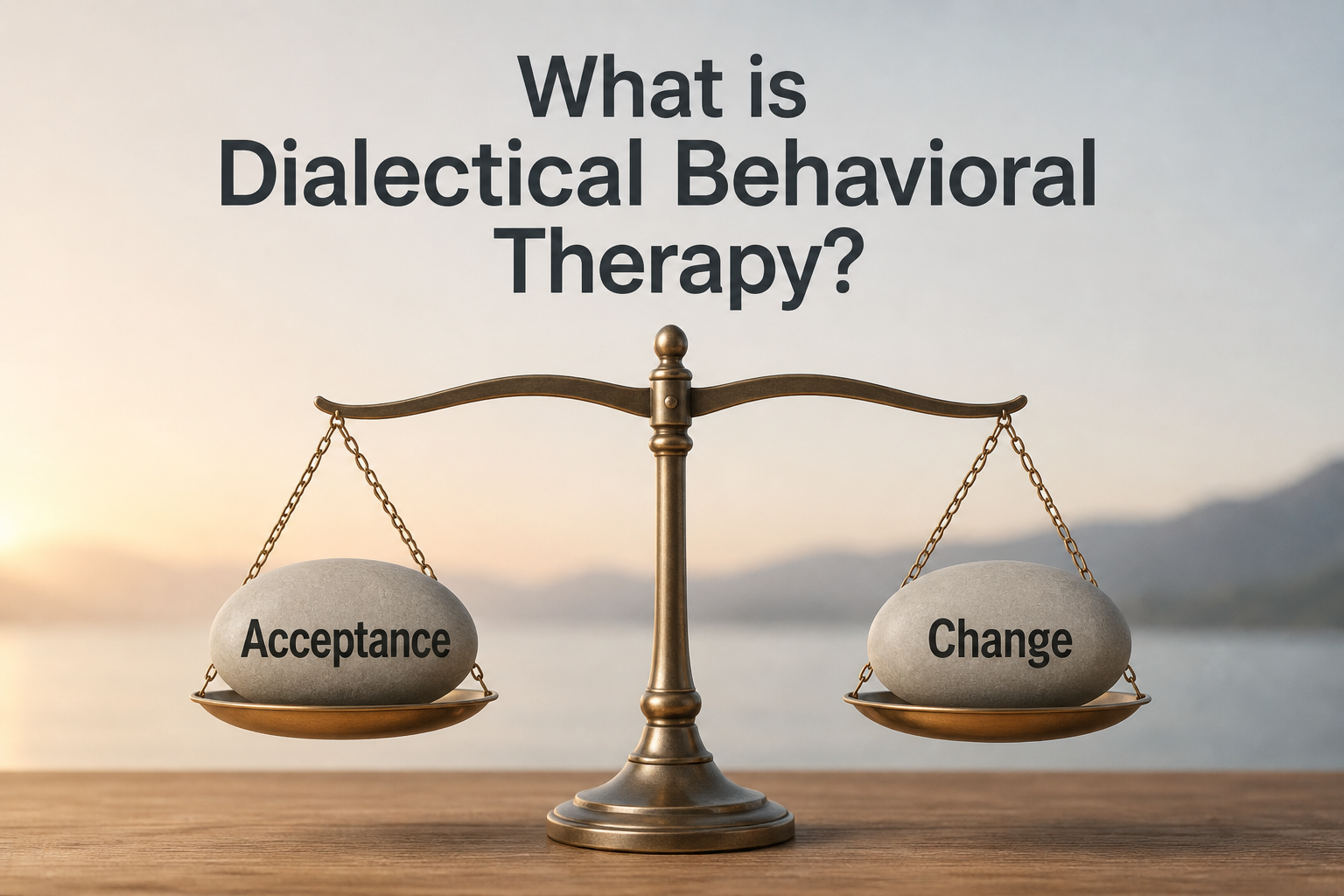
At its heart, DBT asks an interesting question: How can we accept ourselves and our lives as they are while also working to change them?

What Does “Dialectical” Mean?

The word dialectical refers to the idea that two things that seem contradictory can both contain truth.

For example:

I am doing the best I can, and I need to do better.

Those statements may initially seem incompatible. If I am already doing my best, why should I need to do better? DBT asks us to consider that both can be true. Given your history, circumstances, knowledge, emotional state, and skills, you may genuinely be doing the best you can right now. At the same time, what you are doing may not be working. You may need to learn new skills, make different choices, or change your circumstances.

This balance between acceptance and change runs throughout DBT. Acceptance without change can leave us stuck. Change without acceptance can turn into constant self-criticism. DBT tries to hold both.

The Assumptions of DBT

DBT is built around several assumptions about people and behavior. Among the most important are:

  • People are doing the best they can.
  • People want to improve.
  • People need to do better, try harder, and become more motivated to change.
  • People may not have caused all of their problems, but they still have to solve them.
  • New behaviors have to be learned and practiced in the situations where they are needed.
  • People cannot fail at DBT. When treatment isn’t working, the task is to understand what isn’t working and make adjustments.

These assumptions reflect the dialectical nature of the treatment. DBT does not require us to decide whether someone is responsible or blameless, strong or weak, trying or not trying. Human behavior is usually more complicated than that.

You may not have chosen the circumstances that caused your pain. You may nevertheless be the person who has to figure out what to do about it.

What Is the Goal of DBT?

The broad goal of DBT is sometimes described as building a life worth living.

That will mean different things to different people. For one person, it might mean maintaining relationships without constantly fearing abandonment. For another, it might mean getting through intense emotions without using substances or self-destructive behaviors. Someone else might want to communicate more effectively, manage anger, tolerate uncertainty, or stop allowing anxiety to dictate everyday decisions.

DBT therefore isn’t simply about making unpleasant feelings disappear. Sometimes feelings provide useful information. Sometimes distress is an understandable response to genuinely difficult circumstances. And sometimes a painful situation cannot immediately be changed.

Instead, DBT teaches us to respond more effectively to whatever situation we are actually facing.

Four Ways to Respond to a Problem

One particularly useful DBT idea is that there are essentially four ways we can respond to a problem.

We can solve the problem—or leave the situation. If something can be changed, we can identify the problem and take practical steps to address it. Sometimes the solution is changing or leaving the situation itself.

We can feel better about the problem. A situation may remain the same while our emotional response to it changes. We can examine our interpretations, regulate emotions, practice acceptance, or find a different way of relating to what happened.

We can tolerate the problem. Some problems cannot be fixed right now. DBT teaches distress-tolerance skills for getting through painful situations without making them worse.

Or we can do nothing and stay miserable.

That last option may sound harsh, but it reflects an important point: doing nothing is still a choice. Sometimes we cannot control what happened to us, what another person does, or what life has placed in our path. We can still work on choosing our response.

The Four DBT Skill Groups

DBT organizes many of its practical tools into four major skill areas.

Mindfulness teaches us to pay attention to what is happening in the present moment without immediately judging it or reacting to it. It forms the foundation for many other DBT skills.

Emotion regulation helps us understand emotions, reduce emotional vulnerability, and respond to feelings in ways that fit the situation rather than simply acting on emotional impulses.

Distress tolerance focuses on surviving painful moments that we cannot immediately change. The goal isn’t to pretend that distress feels good. It is to get through it without turning a difficult situation into an even more difficult one.

Interpersonal effectiveness focuses on relationships: asking for what we need, saying no, setting boundaries, managing conflict, maintaining self-respect, and balancing our own needs with those of other people.

Together, these skills provide something like a toolbox. DBT isn’t about using every tool in every situation. It is about recognizing what kind of problem you’re facing and learning which tool is most likely to help.

In the next four parts of this series, we’ll look more closely at each of these skill areas, beginning with mindfulness—the foundation on which the rest of DBT is built.


If you live in Washington State, and would like to set up an appointment with Susan Reimers, LICSW at Transcendent Mental Health, please click here.

Sun rays shining through dark storm clouds above green and brown mountains
Therapy

How to Cope With Panic Attacks Caused by Trauma and PTSD

Woman holding her head in stress at office desk with computer screens

Panic attacks can feel terrifying, especially when they are connected to unresolved trauma or Post-Traumatic Stress Disorder (PTSD). A racing heart, shortness of breath, dizziness, trembling, and overwhelming fear can make it feel as though something catastrophic is happening. For trauma survivors, panic attacks are often more than anxiety—they are the nervous system reacting to reminders of past danger.

Understanding how trauma-related panic works is an important first step toward healing. The good news is that there are effective treatments and coping strategies available, including therapy, medication, grounding exercises, and lifestyle interventions. With the right support, it is possible to reduce the intensity and frequency of panic attacks and regain a sense of control.

What Causes Panic Attacks in PTSD?

PTSD changes the brain and body’s stress response system. After experiencing trauma, the nervous system can become stuck in “survival mode.” This means the brain may interpret ordinary situations as threatening, even when there is no immediate danger.

Triggers for trauma-induced panic attacks can include:

  • Loud noises or crowded environments
  • Flashbacks or intrusive memories
  • Emotional conflict or relationship stress
  • Certain smells, sounds, or locations
  • Feeling trapped, powerless, or overwhelmed

When triggered, the body releases stress hormones like adrenaline and cortisol, activating the fight-or-flight response. The result can be intense physical and emotional symptoms that feel impossible to control in the moment.

Immediate Coping Strategies for Panic Attacks

1. Use Grounding Techniques

Grounding exercises help bring attention back to the present moment instead of the traumatic memory or fear response.

One of the most effective methods is the “5-4-3-2-1” grounding exercise:

  • 5 things you can see
  • 4 things you can touch
  • 3 things you can hear
  • 2 things you can smell
  • 1 thing you can taste

This technique helps interrupt the panic cycle and reminds the brain that you are safe right now.

2. Focus on Slow Breathing

Trauma-related panic attacks often cause rapid, shallow breathing, which can worsen dizziness and fear. Deep breathing exercises help regulate the nervous system and reduce physical symptoms of panic.

A simple method is box breathing:

  • Inhale for 4 seconds
  • Hold for 4 seconds
  • Exhale for 4 seconds
  • Pause for 4 seconds

Repeating this cycle for several minutes can calm the body’s stress response.

3. Challenge Catastrophic Thoughts

Panic attacks often come with frightening thoughts such as:

  • “I’m dying.”
  • “I’m losing control.”
  • “I’m not safe.”

While these thoughts feel real during panic, they are symptoms of the nervous system being overstimulated. Repeating calming statements like “This is a panic attack,” or “I have survived this before,” can help reduce fear and restore perspective.

4. Engage the Body

Trauma lives not only in the mind but also in the body. Gentle movement can help release nervous system tension during a panic attack.

Helpful physical interventions include:

  • Walking
  • Stretching
  • Progressive muscle relaxation
  • Holding ice cubes or splashing cold water on the face
  • Using a weighted blanket

These sensory experiences help reconnect the body to the present environment.

Best Therapies for PTSD and Panic Attacks

Professional mental health treatment is often essential for long-term healing. Several evidence-based therapies are highly effective for trauma-related panic.

Cognitive Behavioral Therapy (CBT)

CBT helps individuals identify negative thought patterns that fuel anxiety and panic attacks. It teaches practical coping skills and healthier ways to respond to triggers.

Eye Movement Desensitization and Reprocessing (EMDR)

EMDR is a trauma-focused therapy designed to help people process painful memories in a safer and less emotionally overwhelming way. Many PTSD survivors report significant reductions in panic symptoms after EMDR treatment.

Exposure Therapy

Exposure therapy gradually helps people confront triggers in controlled, supportive settings. Over time, this can retrain the brain to stop interpreting those triggers as dangerous.

Somatic Therapy

Somatic approaches focus on how trauma is stored physically in the body. Techniques involving breathwork, movement, and body awareness can help regulate the nervous system and reduce chronic hypervigilance.

Medication Options for Panic Attacks and PTSD

Medication can be an effective part of treatment, especially when panic attacks interfere with work, sleep, or daily functioning.

Common medications include:

  • Sertraline
  • Paroxetine
  • Fluoxetine

These antidepressants are often prescribed for both PTSD and panic disorder because they help regulate serotonin levels and reduce overall anxiety over time.

Some individuals may also benefit from short-term anti-anxiety medications such as:

  • Lorazepam
  • Clonazepam

These medications can reduce acute panic symptoms quickly but are generally used cautiously because of potential dependence risks.

For PTSD-related nightmares and sleep disturbances, medications like Prazosin may also help improve sleep quality and nighttime anxiety.

Medication decisions should always be made with a licensed healthcare provider who understands trauma and anxiety disorders.

Lifestyle Changes That Help Reduce Panic Attacks

Healing from trauma requires supporting the nervous system consistently, not just during moments of crisis. Important lifestyle habits include:

Prioritize Sleep

Poor sleep increases stress hormones and emotional reactivity. Creating a calming nighttime routine can help reduce panic vulnerability.

Limit Caffeine and Alcohol

Both substances can intensify anxiety symptoms and trigger panic attacks in sensitive individuals.

Practice Daily Mindfulness

Meditation, yoga, journaling, and mindfulness exercises can help retrain the brain to stay present rather than stuck in survival mode.

Build Safe Connections

Isolation often worsens PTSD symptoms. Supportive relationships, trauma-informed therapy, and support groups can provide emotional safety and validation.

Recovery Is Possible

Living with panic attacks caused by trauma or PTSD can feel exhausting and isolating, but healing is possible. Recovery does not mean never feeling anxious again. It means learning how to regulate the nervous system, process traumatic experiences safely, and regain confidence in your ability to cope.

Panic attacks are not signs of weakness. They are signs of a nervous system that has been overwhelmed and is trying to protect itself. With the right combination of coping strategies, therapy, lifestyle support, and medical care when needed, people can move from survival mode toward stability, safety, and healing.

Climate, Therapy

Coping with Climate Anxiety: DBT Techniques for a Better Future

What Dialectical Behavioral Therapy Can Teach Us About Coping With an Uncertain Future

What is DBT?

Dialectical Behavioral Therapy (DBT) is an effective, evidence-based therapeutic tool that teaches practical skills in the areas of Mindfulness, Interpersonal Effectiveness, Emotional Regulation and Distress Tolerance. It is considered an important tool in the treatment of Borderline Personality Disorder and a host of other mental health conditions. As it happens, it’s also a good tool for combating the very real and very understandable issue of Climate Anxiety.

How Can DBT Help with Coping?

At the most basic level, DBT posits that any problem can be solved in four distinct ways. Reading through the list below, you’ll notice there are three active solutions, and one that requires no action at all:

  1. You can actually SOLVE the problem.
  2. You can FEEL BETTER about the problem.
  3. You can ACCEPT/TOLERATE the problem.
  4. You can DO NOTHING and stay miserable.

But what do these options mean exactly? Let’s take a moment to explore them one by one.

SOLVING Climate Change

Solving a problem is always the best solution, yet, it’s not always a realistic option. When it comes to climate change, no one person on the planet has the ability to completely resolve the issue of greenhouse gas emissions. That said, each of us has the ability to do what we can. This might mean living small, cutting back on beef consumption, living in a walkable/bikeable neighborhood, buying an electric vehicle next time you’re in the market for a car, cutting back on plane trips, or any number of other things. In addition, you have the option of voting for leaders who care about climate change, supporting the work of climate activists and communicators, or creating innovative ideas, products and services. You may not be able to end the global crisis, but you can solve the smaller issue of your personal contribution

It’s true, you’re only one person. The change you make is a tiny drop in a very large bucket. It’s also true that climate change cannot be solved without your contribution. That bucket needs every drip. A jigsaw puzzle remains unfinished without every single piece. When many people acknowledge their carbon footprint and make necessary adjustments, the aggregate effect is very significant. In fact, it’s the only path to a complete solution.

Don’t get caught in the bystander effect! Don’t assume someone else will solve the problem! Be the change you want to see!

FEELING BETTER about Climate Change

While it’s very understandable to harbor deep-seated concerns about the planet we live on, it is also easy to catastrophize and engage in mental-filtering or all-or-nothing thinking. When we concentrate on our failures, it’s easy to lose sight of hopeful developments and the significant progress we’ve already made. Clean energy production has become 99% cheaper to build and implement than old-fashioned coal-burning power plants. A global solar power boom is underway, changing the way human kind generates energy, heats water, and fuels their vehicles. Speaking of electrified transportation, EV sales are growing year after year. And while there has been negative press regarding the ethical and environmental costs of mining vital battery components, or the strain EVs will put on our current power grid, these problems can (and will) be solved. Oil, coal and gas production is rife with its own ethical and environmental costs, and our current fossil fuel infrastructure didn’t leap into existence overnight. We’re moving in the right direction, but change takes time.

When you find yourself falling into a pit of despair, start asking questions. “Are my thoughts balanced? Are they evidence-based?” Put your thoughts on trial. Fact check. It won’t hurt, and it just might help relieve some anxiety!

In addition, you might try “reframing”. For example, when you think about problems that exist on a global scale, they can seem utterly hopeless and overwhelming. This is because your frame might be too big. Global problems require global solutions, and last time I checked, no one person has that much power. Try a smaller frame. Focus on your personal realm of influence. At the national level, you can help select leadership, you can make consumer choices, and support non-profits and activism. You’ll have even more influence at the regional and local levels, where your unique voice is more likely to stand out. You have still more power in your home, family, and close-knit communities. You have a choice. Use a frame that feels hopeful and empowering!

ACCEPTING or TOLERATING Climate Change

Learning to tolerate the distress of a bad situation is not as ideal as solving the problem, or even feeling batter about it. That said, it can be a way to find relief from intense emotions. DBT offers an entire suite of Distress Tolerance Skills ranging from those designed for crisis experiences to practical, everyday strategies for tolerating mild distress. Here are a few examples:

The TIPP Skill (Temperature, Intense exercise, Paired muscle relaxation, Paced breathing) offers quick and effective ways to calm your body when anxiety runs high.

The ACCEPTS Skill (Activities, Contributions, Comparisons, Emotions, Pushing away, Thoughts and Sensations), on the other hand, offers practical methods to lower our distress on a day to day basis.

One important distress tolerance skill is Radical Acceptance. Often, we add an additional layer of distress/anxiety when we struggle to accept certain unpleasant realities. While the stressor (climate change) is painful enough all on its own, we can amplify that distress by believing that things “should” be different. Just as a person who has lost their life savings might struggle to accept their new circumstances- holding on to outdated notions of what resources they used to have- doing so may prevent that person from embracing life as it currently is. Accepting the fact that climate change is happening, that you cannot solve it alone, and that human beings are a complicated and frustrating lot can help you end your fight against reality. That doesn’t mean you suddenly feel like everything’s fine. Nor does it mean sacrificing your values.

That person who lost their life savings might begin to improve their financial health through budgeting, saving and investment, If they practice radical acceptance along the way, they can do so without the added distress of feeling or believing that life should be anything other than what it is. Settling that fight against reality leaves room for the present, for joy, and for undistracted time with our loved ones. How would radical acceptance improve your life? What kind of difference could it make?

DOING NOTHING and STAYING MISERABLE

This last “solution” is really just the status quo, isn’t it? Doing nothing really is an option. You’re reading this post because you are anxious about the present and future of our climate. Your anxiety is so significant that you’re looking for tools and perspectives to help. If you do nothing at all, you can remain in that distress. That’s a choice you have. Problem is, it’s not a solution. Not really. It won’t help you solve the problem (or contribute to mitigation. Doing nothing won’t help you feel better. It won’t even help you deal with your distress. It only helps maintain the status quo (your very understandable climate anxiety).

So, rather than doing nothing, what’s the harm in dabbling in the above three strategies?

MORE RESOURCES

If you’d like to learn more about Dialectical Behavioral Therapy, there are a number of searchable sites online (Google, Psychology Today and YouTube are good sources). Focus on the four major skill areas: Mindfulness, Emotional Regulation, Distress Tolerance, and Interpersonal Effectiveness.

If you’d like to make a therapy appointment, and you live in Washington State, you can do so by visiting my Psychology Today page and contacting me directly. I offer TeleHealth services statewide.

:), Susan Reimers, JD/LICSW